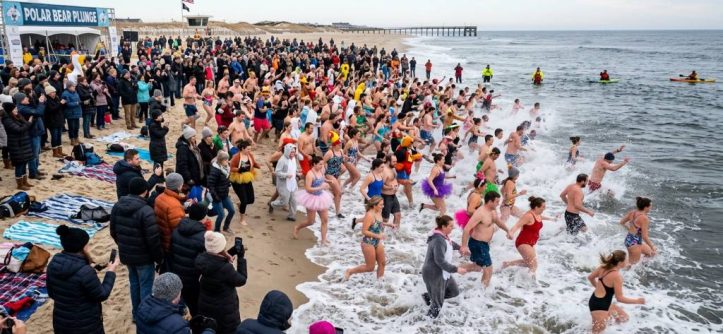
Every year on January 1, thousands of brave participants across the United States rush into freezing cold water to kick off the new year. These events are known as polar bear plunges. The tradition combines community spirit, personal challenge, and charitable giving. For 2027, January 1 falls on a Friday, giving participants a perfect holiday start.
This guide covers everything you need to know about participating in a polar bear plunge in 2027. You will find dates, locations, registration details, and charity information to help you plan your icy adventure.
What Is a Polar Bear Plunge?
A polar bear plunge is an organized swim or wading event held in cold, open water during the winter months. Most events take place on New Year’s Day. Participants sprint into oceans, lakes, rivers, or pools filled with ice-cold water. The water temperature often ranges from 32°F to 50°F.
The activity is not just about the thrill. Many events raise significant funds for local charities. Some of the most popular causes include children’s hospitals, Special Olympics programs, and environmental organizations. Therefore, what looks like a wild stunt often serves a meaningful purpose.
Why January 1, 2027 Is the Perfect Day
January 1, 2027 lands on a Friday. This timing works well because many people have the day off. Families and friend groups can attend together without worrying about work schedules. Additionally, the holiday atmosphere makes the experience even more festive and memorable.
The start of a new year carries symbolic weight. Many participants say the plunge helps them feel refreshed, energized, and mentally prepared for the months ahead. Whether you believe in the health benefits or simply enjoy the adrenaline rush, the event offers a unique way to welcome 2027.
Major Polar Bear Plunge Events Across the USA in 2027
Hundreds of events happen across the country every New Year’s Day. Below are some of the most well-known locations and events to look out for.
Coney Island Polar Bear Club – New York
The Coney Island Polar Bear Club in Brooklyn, New York, holds the longest-running New Year’s Day swim in the United States. The club has hosted this event since 1903. Thousands of spectators line the beach while participants dash into the Atlantic Ocean. The event is free to watch and welcomes swimmers of all experience levels.
Registration typically opens in November. Swimmers can sign up on the club’s official website. The event begins at 1:00 PM on January 1.
Maryland Special Olympics Plunge – Ocean City
Maryland’s Special Olympics Polar Bear Plunge is one of the largest charity plunges in the country. Held at Ocean City, this event draws thousands of participants who raise money for Special Olympics Maryland athletes. Each plunger sets a fundraising minimum before jumping into the Atlantic.
Registration for the 2027 event is expected to open in September 2026. Teams and individuals can register through the Special Olympics Maryland website.
Chicago Polar Plunge – Lake Michigan
The Chicago Polar Plunge takes place along the shores of Lake Michigan. Organized by Special Olympics Illinois, this event attracts corporate teams, community groups, and individuals from across the Midwest. Participants must meet a fundraising requirement before they can take the plunge.
The event typically runs from 10:00 AM to 2:00 PM at North Avenue Beach. Registration usually opens in the fall.
Seattle Polar Bear Plunge – Lake Washington
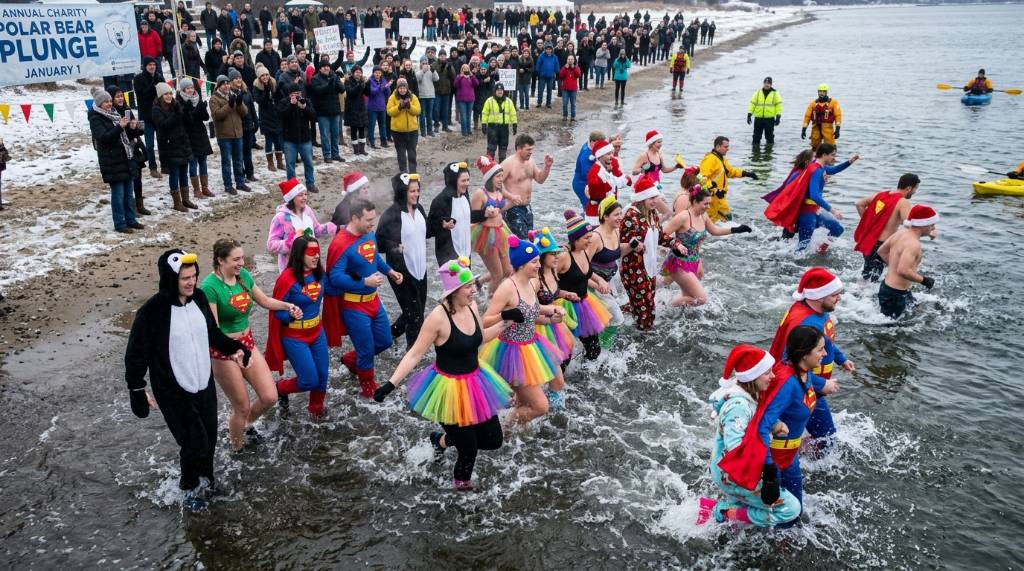
Seattle hosts a lively plunge at Lake Washington each New Year’s Day. Local residents gather in costume and dash into the water together. The atmosphere is festive, lighthearted, and welcoming to newcomers.
The event is typically free to join, though donations to local charities are encouraged.
New England Polar Bear Plunges – Massachusetts
Massachusetts hosts numerous plunges on January 1 each year. Some of the most popular locations include Nantasket Beach in Hull, Plum Island, and various Cape Cod beaches. Many of these events support local food banks and children’s charities.
However, it is important to check each event’s individual registration requirements, as they vary widely.
Polar Bear Plunge Events by Region
| Region | Notable Location | Charity Partner | Estimated Participants |
| Northeast | Coney Island, NY | Local charitable causes | 1,000+ |
| Mid-Atlantic | Ocean City, MD | Special Olympics Maryland | 8,000+ |
| Midwest | Chicago, IL | Special Olympics Illinois | 5,000+ |
| South | Virginia Beach, VA | Various local charities | 2,000+ |
| West Coast | Seattle, WA | Local nonprofits | 1,500+ |
| New England | Hull, MA | Food banks, children’s hospitals | 500+ |
How to Register for a 2027 Polar Bear Plunge
Registration processes vary depending on the event you choose. However, most events follow a similar pattern.
First, visit the official website of the event you want to join. Many events open registration two to three months before January 1. Second, fill out the online registration form with your contact information. Third, pay any required entry fees or set up a fundraising page if the event requires a minimum donation amount.
Some events, especially charity-focused ones, will ask you to collect pledges from friends and family. Tools like social media and email make this step fairly easy. Additionally, many events provide a participant kit that includes a t-shirt, a swim cap, and instructions for the day.
Tips for a Smooth Registration
- Register early to secure your spot, as popular events fill up fast.
- Bring your confirmation email or registration QR code on the day of the event.
- Check for age restrictions — some events welcome children with parental consent.
- Review the weather policies, as some events may be rescheduled due to safety concerns.
Charity Events and Fundraising in 2027
Charity work is at the heart of many polar bear plunge events. Across the United States, plunges raise millions of dollars each year for a wide range of causes.
Special Olympics Programs
Some of the largest fundraising plunges benefit Special Olympics programs in states like Maryland, Illinois, New Jersey, and Massachusetts. These events set fundraising minimums — usually between $75 and $150 per participant — to ensure meaningful contributions.
Children’s Hospitals and Medical Research
Several events in the Midwest and Southeast partner with children’s hospitals. Funds raised support medical equipment, research programs, and patient care. Participants often swim in honor of a child or family member they know.
Environmental Organizations
Coastal events in states like California, Oregon, and Washington frequently support marine conservation efforts. Donations fund beach cleanups, ocean research, and wildlife protection programs.
How to Maximize Your Fundraising
- Share your fundraising page on social media at least three weeks before the event.
- Send personal emails to family members and close friends.
- Ask your employer if they offer donation matching.
- Post a countdown to build excitement and remind supporters to donate.
What to Expect on the Day
Arriving prepared makes your experience much more enjoyable. Most events start with a gathering area where participants check in, receive their kits, and socialize before the plunge.
A typical event timeline looks like this:
| Time | Activity |
| 8:00 AM – 9:00 AM | Arrival and check-in |
| 9:00 AM – 10:00 AM | Warm-up activities and entertainment |
| 10:00 AM – 11:00 AM | Opening ceremony |
| 11:00 AM – 12:00 PM | The plunge |
| 12:00 PM – 1:00 PM | Post-plunge warm-up and celebration |
After you plunge, warm up quickly. Bring a thick towel, a dry change of clothes, warm socks, and a hot drink in a thermos. Additionally, wearing sandals to the water’s edge will protect your feet from cold sand or gravel.
Safety Tips for First-Time Plungers
Safety comes first in any cold-water event. Following these guidelines will keep your experience fun and injury-free.
- Consult your doctor before participating if you have heart conditions, high blood pressure, or respiratory issues.
- Never plunge alone — always go with a group or in an organized event.
- Do not stay in the water longer than 30 to 60 seconds.
- Avoid dunking your head in very cold water to prevent cold shock.
- Move away from the water immediately after your plunge and begin warming up.
Event organizers and medical staff are present at most official events to assist participants. Therefore, stick to organized events rather than doing this on your own.
What to Wear for a Polar Bear Plunge
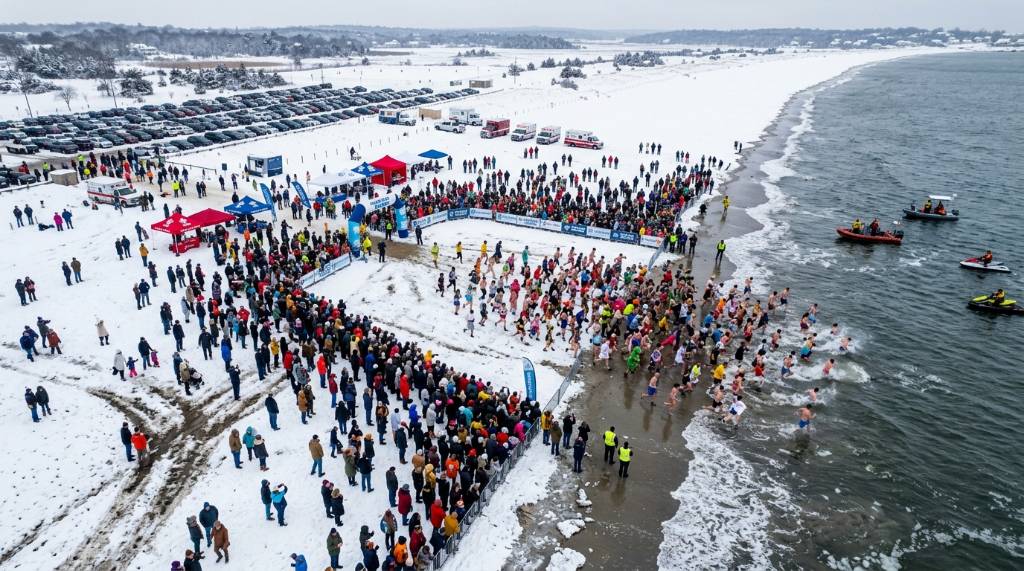
Clothing choices are surprisingly creative at these events. While many participants wear swimsuits, others go full costume. Here are some practical suggestions.
For the plunge itself, a standard swimsuit or board shorts work perfectly. Neoprene gloves and booties can protect your extremities from the worst of the cold. Some participants wear wetsuits, though many events encourage a spirit of pure bravado with minimal layers.
For before and after the plunge, wear warm layers you can remove quickly. A fleece jacket, wool hat, and thick socks are highly recommended.
Family-Friendly Plunge Events
Many events across the USA welcome families with children. Some organizers set up heated tents, food vendors, and entertainment to make the day enjoyable for non-swimmers too.
Events in cities like Austin, Texas; Denver, Colorado; and Portland, Oregon often have a strong family culture. Children aged 8 and older may participate in some events with a parent or guardian present. However, always confirm the age policy with the specific event organizer.
Conclusion
Polar bear plunges on January 1, 2027 offer an exciting, meaningful, and community-driven way to start the new year. Events run from coast to coast, welcoming participants of all ages and fitness levels. Many plunges raise vital funds for charities including Special Olympics programs, children’s hospitals, and environmental organizations.
Registration for most events opens in the fall of 2026. Preparing early gives you the best chance of securing a spot in the most popular events. Whether you are motivated by charity, tradition, or pure adventure, a polar bear plunge can be a memorable way to launch the year ahead.
Stay safe, dress warmly after your dip, and enjoy every freezing second of it.
Frequently Asked Questions
When do most polar bear plunges take place in 2027?
Most events are held on January 1, 2027. Some coastal cities may also host events on New Year’s Eve or in the first weekend of January.
Do I need to know how to swim to participate?
Most polar bear plunges involve wading into shallow water, not swimming. However, you should feel comfortable in water and follow all safety guidelines provided by the organizers.
Is there an age limit for participating?
Age limits vary by event. Many events welcome participants as young as 8 with parental consent. Always check the specific rules of the event you plan to join.
How cold is the water at a polar bear plunge?
Water temperatures typically range from 32°F to 50°F depending on the location. Ocean water in the mid-Atlantic states tends to sit around 40°F to 45°F in early January.
Do I have to raise money to participate?
Not all events require fundraising. Some are open to the public at no cost. Charity-focused events, such as those benefiting Special Olympics, typically set a minimum fundraising amount.
How long should I stay in the water?
Most participants stay in for 30 to 60 seconds. Staying longer increases the risk of cold shock or hypothermia. Get out quickly and warm up right away.
Can I participate if I have a health condition?
Speak with your doctor before joining if you have heart disease, high blood pressure, asthma, or any circulatory condition. Cold water immersion places significant stress on the body.
Are polar bear plunges safe?
Organized events are generally safe because medical staff and lifeguards are present. Following the event’s safety instructions greatly reduces any risk.
What should I bring to a polar bear plunge event?
Bring a dry change of clothes, a warm jacket, thick socks, a towel, waterproof footwear, and a hot drink. If you are raising funds, bring a printed or digital copy of your fundraising confirmation.
Where can I find a polar bear plunge near me in 2027?
Search for events through local Special Olympics chapter websites, city parks and recreation departments, and community event boards. Most events post their registration details by October or November 2026.