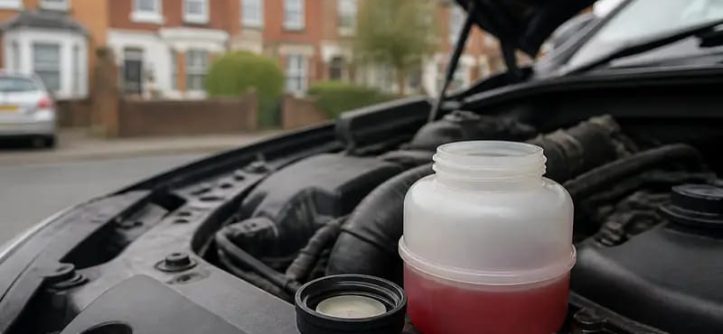
Steering problem? Check the power steering reservoir. It only takes a minute to pop the bonnet and have a look. But what do you look for? In this article we explain what the colour and clearness of your power steering fluid indicates.
What Healthy Fluid Looks Like
Power steering fluid supplied in new bottles is usually a clear red, pink or even light amber liquid. It should be clear enough for you to see through it like a nice clean cordial and there should be no sign of any cloudiness or floaters in the liquid. The best thing to do is to take a look now the car is fine and then you can easily notice any change later on.
Why Dark Brown Or Black Fluid Matters
Oxidised: A dark brown or black fluid has oxidised whilst in the reservoir. Although this fluid may look awful it is not necessarily a cause for concern. However, the fluid is overdue for change and it is recommended that it is replaced as soon as possible. Fluid degradation is one of the simple checks that are conducted by garages when undertaking a service on a vehicle. As with engine oil, brake fluid and other vehicle fluids the colour and even the smell of the fluid can be used as an initial indication of wear and degradation prior to further testing.
What Milky Or Cloudy Fluid Means
A milky, cloudy or frothy looking power steering fluid indicates that there is water present in the system. This usually is due to a failed seal somewhere in the system, or even the reservoir cap not sealing properly. This type of fluid may cause corrosion within the pump and rack, so it’s best to get it looked at as soon as possible and not try and top up the fluid with the hope it will clear.
Why Foam And Bubbles Appear
Leave the car for a few minutes and come back to check the reservoir for steering fluid. If there are any bubbles that have come to the surface then have air been introduced into the system. This would normally happen when the fluid level has dropped at some time and then been topped up. Check the connections for any signs of leakage. Air in the system does not provide any lubrication and can make the system feel ‘light’ or even ‘spongy’ when steering.
Why Fluid Type Changes The Shade
Don’t make the mistake of thinking that certain power steering fluids are darker than others when new. Different types of fluid have different shades to them when brand new. As a rule it is best to consult the vehicle handbook to determine what type of fluid your car uses and what colour it should be. This will save you from a false alarm when conducting a roadworthiness check, and is further advice on vehicle adaptation and maintenance support.
What A Burnt Smell Tells You
A struggling pump (caused by wear and tear, or a restriction somewhere in the system) works hard, generating extra heat. This heat is what you are smelling should you detect a burnt or scorched odour emanating from the power steering reservoir. Hopefully it will give you time to investigate before the familiar sounds and feeling of a worn steering system come to light.
What Metallic Flecks Point To
Tiny metallic flecks or even grit in your power steering fluid are an indication of wear occurring inside the pump or rack. This is different to contamination in the system and also to the fluid deteriorating due to high temperatures. The fluid in your power steering system is subject to a lot of wear and tear and the fluid can degrade over time but it is possible to determine if wear is currently occurring. By replacing worn Steering Parts you can prevent further damage spreading to other parts of your vehicle.
What To Do Once You Spot A Change
Check the level when the engine is cold, as the steering fluid will have expanded when hot. Try to use the same type of fluid as recommended by the manufacturer (found in the handbook), and avoid mixing types of fluid. Avoid topping up the fluid repeatedly as this can suggest that there is a leak somewhere in the system. A system that requires topping up on a regular basis (every few weeks) should be inspected by a qualified technician for possible leaks.
It doesn’t take long to check the steering fluid colour but it can stop problems with your steering developing into bigger, more costly repairs.