
Sitting through an eight-hour workday often leaves you with a familiar ache in your lower back—that dull, nagging tension that makes you shift constantly in your seat. You’ve probably tried adjusting your posture or propping a folded sweater behind you, but the relief never seems to last. The real culprit is that your office chair simply isn’t providing the structural support your lumbar spine needs to maintain its natural curve. A lumbar pillow for office chair use bridges that gap, acting as a targeted support system that keeps your spine aligned while you focus on your work. By the end of this guide, you’ll know exactly which features to prioritize, what materials actually deliver comfort, and how to avoid paying more for features you’ll never use.
Why Does Your Lower Back Hurt After Sitting All Day?
Your spine naturally forms an inward curve at the lower back, known as the lumbar lordosis. When you sit for extended periods, especially in a chair that lacks adequate support, your pelvis tends to roll backward, flattening that curve. This postural collapse places excessive pressure on the intervertebral discs and stretches the ligaments and muscles around your lower spine, which triggers pain and stiffness.
The Biomechanics of Prolonged Sitting
According to recent ergonomic research, sitting increases disc pressure by up to 40% compared to standing. When you add poor posture to the equation, that pressure intensifies even further. Your core muscles gradually fatigue, leaving your lumbar spine to bear the brunt of gravity without proper muscular support. Over weeks and months, this repeated strain can lead to chronic discomfort or even contribute to more serious spinal conditions.
The Silent Risk of Muscle Fatigue
Static sitting forces your back muscles to work continuously just to keep you upright. By midday, those muscles begin to tire, and you may not even notice that you’ve gradually slumped forward. This is why a passive support tool—not just willpower—is often necessary to maintain proper alignment throughout your entire work shift.
Why Chairs Alone Often Fall Short
Even high-end ergonomic chairs assume a universal spine shape. However, your lumbar curve’s depth and position are unique to your anatomy. A chair may provide built-in support at the wrong height or with insufficient depth for your specific frame, which is why a dedicated pillow allows you to tailor that support precisely to your lower back.
What Features Should You Look for in a Lumbar Pillow?
The ideal lumbar pillow for office chair needs to balance firmness, adjustability, and breathability to provide effective, all-day relief. Focus on three core aspects: adjustable straps for secure positioning, a memory foam core that molds to your shape, and a removable cover that you can wash regularly for office hygiene.
Memory Foam vs. Latex vs. Gel
Memory foam is the most popular option for its pressure-relieving properties, as it contours to your unique back shape. High-density foam provides better long-term durability, though it can retain heat. Latex offers similar contouring with more natural bounce and better airflow, making it a cooler alternative. Gel-infused foams attempt to combine the best of both, using cooling gel particles to regulate temperature while maintaining that familiar foam feel.
While supporting your lower back during the workday is essential for posture, maintaining proper spinal alignment at night is just as important—be sure to Select the Right Memory Foam Knee Pillow for Better Sleep Support to wake up pain-free.
Adjustability: Straps, Ties, and Loops
A pillow that slides around or drifts to one side becomes useless within minutes. Look for a pillow with elastic straps that can slip over your chair’s backrest, or a tie system that lets you secure it tightly. Some premium models even offer variable-fill options that let you add or remove fill material to fine-tune the pillow’s thickness.
Density: The Firmness Factor
Firmness ratings vary dramatically between products. Extra-firm pillows work well for users who need aggressive support or who are heavier built, while medium-firm options strike the best balance for average users. Ultra-soft pillows may feel comfortable initially, but they often provide insufficient structural support to actually improve your posture throughout a long shift.
How Do You Determine the Correct Thickness for Your Body?
Your pillow’s thickness should correspond roughly to the gap between your lower back and the chair’s backrest. In general, most office users benefit from a pillow between 3 to 5 inches thick, but your weight, height, and the shape of your chair all influence this ideal measurement.
Estimating Your Ideal Depth
Sit in your office chair with your feet flat on the floor and your hips at a 90-degree angle. Slide your hand between your lower back and the chair’s backrest. If your hand fits snugly with little room to spare, you need a thinner pillow. If the gap feels excessive, especially near the curve of your spine, you’ll want additional thickness.
The Weight and Height Consideration
Taller users or those with longer torsos often require taller pillows, as their lumbar curve sits higher on the back. Heavier users may compress softer foams more easily, meaning they need a denser, firmer product to achieve the same level of support as a lighter user on the same pillow.
Adjustable-Fill Options: The Safety Net
If you feel uncertain about measurements, consider a pillow with adjustable fill. These designs allow you to add or remove shredded foam or micro-beads to find the exact depth for your body. This trial-and-error approach is arguably the most reliable way to achieve a custom fit without returning multiple products.
Which Materials Offer the Best Breathability for Long Hours?
Airflow is critical when you’re sitting on a pillow for hours at a time. Choose breathable mesh covers or natural fabric blends like cotton or bamboo-derived materials, and be aware that traditional memory foam tends to trap body heat more than other alternatives.
The Cooling Technology Breakdown
Passive cooling features like gel-infused foam and open-cell construction help draw heat away from your body. Open-cell foams contain tiny air pockets that promote circulation within the foam itself, which is more effective at temperature regulation than surface-level cooling gels that may eventually dissipate.
Why Fabric Choices Matter More Than You Think
A polyester cover may feel breathable initially, but it tends to trap sweat against your skin. Look for covers made with mesh fabric or materials with moisture-wicking properties. A removable, machine-washable cover is a practical feature that prevents odor buildup and maintains hygiene, especially in shared office environments.
Seasonal Considerations
If you work in a warm climate or your office lacks robust climate control, prioritize cooling features heavily. If you work in an air-conditioned environment, you may not need advanced cooling technology and can focus your budget on better support or durable materials instead.
When Should You Replace Your Current Lumbar Support?
Most lumbar pillows last between one and three years with regular use, depending on foam density and how often you use them. If you notice visible flattening, permanent indentations, or you’re simply experiencing more back pain than when you bought it, it’s time for a replacement.
Signs of Compression Fatigue
Lift the pillow and press your thumb firmly into its center. If the material resists returning to its original shape within a few seconds, the foam has lost its resilience. A permanent depression in the middle of the pillow is a clear indicator that it no longer provides the structural support your spine needs.
Changes in Your Work Setup
If you switch jobs, move to a new office, or upgrade your office chair, your old pillow may no longer fit. A chair with a curved or contoured backrest may require a thinner pillow, while a flat backrest benefits from a thicker profile. Always reassess your support needs whenever your physical setup changes.
Weight Fluctuations
Significant weight gain or loss alters how your pillow performs, as your soft tissue distribution and compression on the foam will change. Reassess your comfort level and support quality if your body composition shifts by more than a few pounds.
Can a Lumbar Pillow Help with Existing Back Conditions?
Yes, a lumbar pillow can play a meaningful role in managing chronic back conditions such as sciatica, herniated discs, or general muscle strain. By maintaining your lumbar curve, it reduces disc pressure and takes tension off irritated nerve roots.
Using It for Sciatica Relief
Sciatica pain often worsens with prolonged sitting because the seated position compresses the sciatic nerve. A lumbar pillow that helps you maintain an upright posture can reduce this compression significantly, often providing substantial relief for those suffering from radiating leg pain.
Aid for Postural Strain Syndrome
If your back pain stems from poor posture rather than structural damage, consistent use of a lumbar pillow can retrain your spine into a healthier neutral position. Over time, your muscles adapt and your default posture improves even when you aren’t using the pillow.
Complementary Therapy, Not a Cure
Be clear on what a pillow can and cannot do. It provides mechanical support, but it doesn’t replace professional medical treatment, stretching, or strengthening exercises. Use it as one part of a comprehensive approach to back health. Always consult a healthcare provider if you have a specific diagnosis.
How Should You Position a Lumbar Pillow for Maximum Effectiveness?
Place the pillow directly at the curve of your lower back, roughly at belt level, and ensure it sits comfortably without pushing your hips forward unnaturally. The pillow should fill the gap between your spine and the chair without forcing you into an exaggerated posture.
A Step-by-Step Guide to Proper Setup
- Sit in your chair with your back straight and feet flat on the floor.
- Place the pillow horizontally across your lower back, aligning its center with your spine.
- Adjust its height so the thickest part of the pillow matches the deepest curve of your back.
- Secure the straps around your chair’s backrest, tightening until the pillow feels stable.
- Sit back and notice if the support feels filling or if it pushes you forward.
- Adjust the pillow’s angle or thickness until you feel a pleasant, non-forced support.
Common Positioning Mistakes to Avoid
Placing the pillow too high can irritate your shoulder blades or middle back, while placing it too low pushes your hips forward and exaggerates a slouched posture. Many users also place the pillow directly on the lower curve of the spine, which can be unhelpful; the goal is to support the hollow area without pressing into the bones of the pelvis.
The “Goldilocks” Test
Once you’ve positioned the pillow, ask yourself if the pressure feels even. A properly positioned pillow should feel supportive without causing any sharp pressure points. If you notice any discomfort after ten minutes, re-adjust the height or angle—this fine-tuning phase is completely normal and improves with practice.
What Are the Most Common Mistakes People Make When Buying?
Many first-time buyers choose a pillow based on looks, price, or online reviews rather than their actual anatomical needs, leading to disappointment and wasted money. The most prevalent mistake is ignoring the height and depth of your current office chair.
Overlooking Chair Dimensions
High-back chairs, mid-back task chairs, and mesh ergonomic chairs all have different backrest shapes. A pillow designed for a wide executive chair may not fit a slim modern task chair. Always check the dimensions of the pillow and compare them with your chair’s backrest width and height before making a purchase.
Buying Purely on Price
Ultra-cheap pillows are often stuffed with low-density foam that compresses completely within a few weeks. Conversely, premium pricing doesn’t guarantee effectiveness for your specific body. Focus on the materials and construction rather than price alone to find the best value.
Ignoring Maintenance Requirements
Some pillows feature complex covers that are difficult to remove or clean, which becomes an inconvenience over time. Consider whether the cover is washable and whether the foam itself can be spot-cleaned. A pillow that’s easy to maintain will serve you far longer than one that’s awkward to care for.
How Do Lumbar Pillows Compare to Built-In Lumbar Support?
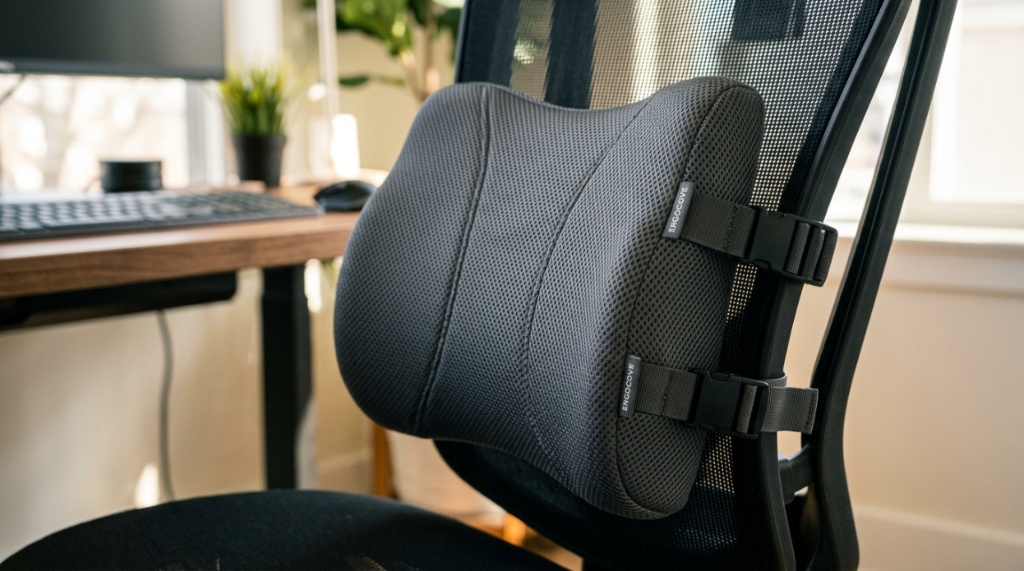
While many office chairs claim to have integrated lumbar adjustments, the range of adjustment is often limited. Dedicated lumbar pillows usually provide more customizable, targeted support, making them a more reliable solution for chronic back pain sufferers.
The Advantages of External Pillows
- Wider range of sizes and firmness options
- Portable across different chairs and locations
- Typically more durable than built-in mechanisms
- Easy to replace when they wear out
- Can be used in multiple seating contexts
Limitations of Built-in Adjustments
Most built-in lumbar supports only adjust in depth, not in height or angle. They also tend to be narrower and less padded than stand-alone pillows. If your chair’s built-in support isn’t in the right vertical position, it can’t fix that with its limited range of motion.
Why Combining Both Works Best
If your chair has built-in support, try setting it to a neutral position and using your lumbar pillow for the primary support. This combo provides more complete coverage than either option alone. The pillow can boost your movement and comfort, while the built-in mechanism adds extra stability when you lean back during breaks.
Is a Lumbar Pillow Your Best Investment for Back Health at Work?
For most office workers, a good lumbar pillow is arguably the most cost-effective ergonomic upgrade you can make, offering immediate relief and long-term spinal benefits for a modest investment. It delivers targeted support right where you need it most.
Immediate Benefits vs. Long-Term Gains
On day one, you’ll likely notice a reduction in discomfort and an improved ability to maintain upright posture. Within a few weeks of consistent use, many users report less fatigue at the end of the day and a general improvement in their sitting habits. This type of daily ergonomic support is a foundational element of preventive care.
Evaluating the Economics
High-quality lumbar pillows range from $20 to $60, a fraction of the cost of a high-end ergonomic chair or regular physiotherapy sessions. Given that lower back pain costs the global economy billions each year in lost productivity and healthcare costs, this is an excellent return on investment.
When to Pair It with Other Ergonomic Equipment
For comprehensive ergonomic health, consider pairing your lumbar pillow with a footrest to keep your knees at a healthy angle or monitor risers to ensure your screen is at eye level. These investments complement each other, creating a workstation that supports your entire body, not just your lower back.
How Do You Care for and Maintain a Lumbar Pillow?
Proper maintenance keeps your pillow fresh and extends its lifespan substantially. Establish a regular cleaning schedule based on how frequently you use the pillow and whether you tend to sweat at work.
Daily and Weekly Care Routine
Fluff the pillow each morning to restore its shape and evenly distribute the filling. During the week, air it out overnight occasionally. This reduces moisture buildup and helps the foam retain its supportive properties for several years.
Washing Tips by Material
Always check the manufacturer’s tags for specific instructions. Most memory foam cores cannot be machine-washed as water may break down the foam structure, but removable covers can usually be laundered. Use a gentle cycle with cold water and hang-dry the cover for best results.
Storage Best Practices for Longevity
When not in use, store the pillow flat rather than folded or compressed under other items. Storing it under heavy weight for extended periods can deform the foam, reducing its ability to bounce back to its original shape during use.
What Should You Do If the Pillow Isn’t Working for You?
If your lumbar pillow feels uncomfortable after a two-week trial period, don’t immediately assume your back is the problem. Consider what specifically is not working: the position, the firmness, or the sizing?
The Two-Week Rule
Your body needs time to adapt to new support systems. Commit to using the pillow consistently for at least two weeks, adjusting the position every few days to find the best spot. This adaptation period allows your muscles and posture to gradually adjust without forcing a hasty judgment.
Troubleshooting Discomfort
If you feel pressure on your tailbone, the pillow may be too thick or positioned too low. Shoulder or upper back tension often means the pillow is sitting too high. Experiment with flipping the pillow vertically or angling it to shift where the support lies.
Knowing When to Return or Exchange
If you’ve attempted multiple positioning strategies and still experience discomfort after the trial period, use the return policy. Reputable companies often have generous trial windows. Don’t settle for a poor fit when other options exist that might match your anatomy better.
Frequently Asked Questions
Can a lumbar pillow make my back pain worse?
Yes, if the pillow is too thick or improperly positioned, it can push your spine into an exaggerated curve, causing discomfort. Start with a thinner profile and gradually increase thickness until you find a supportive, pain-free position.
Is it worth using a lumbar pillow with an ergonomic chair?
Absolutely. Even ergonomic chairs have a limited range of built-in adjustments that often don’t match your unique physiology. A specialized pillow provides personalized support that can correct the flaws of a well-designed but generic chair.
How often should I use my lumbar pillow during the day?
Use it whenever you’re seated at your desk. Consistency is key to preventing posture-related pain. If you switch between chairs throughout the day, consider keeping one at your primary workstation and another for secondary seating areas.
Can I use a lumbar pillow on a sofa or car seat?
Yes, the same ergonomic principles apply in any seated environment where you sit for prolonged periods. Use your pillow on your couch while reading or watching TV, or in your car for longer trips to maintain healthy spinal alignment.
Do I need a doctor’s recommendation before using a lumbar pillow?
For general, non-specific lower back pain, trying a lumbar pillow is generally safe. However, if you have a diagnosed spinal condition or are experiencing severe symptoms, consult a healthcare professional first to ensure it is the right approach for your condition.