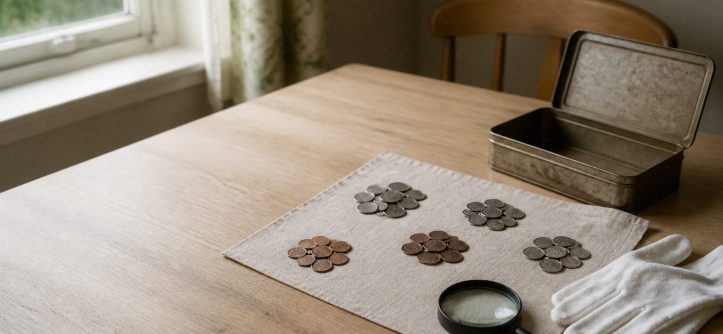
How to value your inherited or childhood coin collection to sell or insure against.
Sort By Era And Type First
First sort the coins into broad categories – ancient, pre-decimal British (pre-1971), decimal British, commemorative issues and foreign. Each of these categories is covered by a variety of reference books, price guides and collector clubs, so it’s best to tackle them one at a time to save time trawling through information that is irrelevant to your coins.
Check The Condition Carefully
Grading affects the value of coins, significantly. Coins are described as worn and fine, very fine, extremely fine and mint uncirculated. Examine the coin for wear, focusing on the highest points of the design. Check for wear on a monarch’s hair for example or the edge of a coin. Do not touch the surface of a coin with your bare hands as you risk marking the surface with your hand’s oils.
Look For Key Dates And Errors
Even seemingly ordinary coins can have great value, especially if they are from a low-mintage year or contain mint errors such as misaligned strikes or doubled letters. The mintage figures for all UK coins are published by The Royal Mint, so it is easy to check the mintage for a particular year and denomination of coin and see whether yours is rare or just old!
Weigh Up The Metal Value
Whether or not your old coins are of any value at all, their face value or even more the metal within them will fetch some sort of base price even were they to be terrible, worn examples – providing they are of silver or gold and of sufficient fineness and weight, compare the coin in question against the current spot price for silver and/or gold, and then add in a little for the collector’s premium.
Use Sale Prices, Not Asking Prices
When researching coin dealers in the UK it is best to look at the completed and realised sale prices for previous sales of similar coins. These prices are far more accurate than a seller’s asking price for a coin. Some listing sites have coins listed for sale by collectors and dealers but are left unsold for long periods as the seller has asked for too much.
Get A Second Opinion Before Selling
Beware of cleaning a coin before selling it as it can decrease significantly in value as each surface is removed. Get a good deal from a reputable dealer and check that they are an accredited member of the British Numismatic Trade Association (BNTA). The BNTA are a trade association who police their members to adhere to a strict code of conduct.
For Coin Dealers UK, visit https://www.gmcoins.co.uk/.
By sorting your coins, checking their condition, and comparing their sale prices, you will find out what they are really worth – much more than a guess!