Planning a forever home means considering your current needs and how they might change over time. One of the best ways to ensure comfort and independence as you age is to incorporate intentional design features from the outset. Whether building from scratch or renovating, investing in custom homes allows you to tailor every space for accessibility, safety, and style, empowering you to enjoy your living space at every stage.
Thoughtful design isn’t only about convenience but dignity and self-sufficiency. When you equip your home for aging in place, you create an environment that can seamlessly adapt to evolving needs, minimizing future disruptions and maximizing peace of mind for you and your loved ones.
Embrace Single-Level Living
Single-level homes are inherently more accessible, eliminating the obstacle of stairs for those with limited mobility. A sprawling, step-free layout streamlines daily movements and reduces the risk of tripping or falling. Home renovations can sometimes transform multi-level properties by reconfiguring the layout or adding accessibility features to improve ease of movement. A main-floor primary suite for homes with multiple levels ensures that occupants can easily access their bedroom, bathroom, and essential living spaces as they age or if their mobility decreases.
Incorporate Universal Design Principles
Universal design creates inclusive spaces suitable for everyone’s needs, regardless of age or physical ability. This increases safety, enables multi-generational living, and boosts your home’s long-term value. Consider these features:
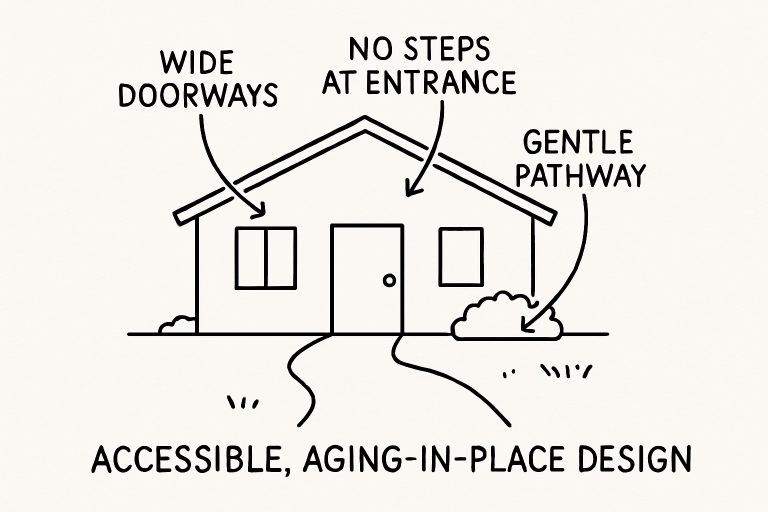
- Wider Doorways and Hallways: Doors at least 36 inches wide and hallways 42 inches or more wide provide smooth navigation for wheelchairs, walkers, or those carrying large objects.
- No-Step Entryways: Entryways without steps ensure effortless access, crucial for wheelchair users and helpful for families with strollers or groceries.
- Lever-Style Door Handles: Easier to use than traditional knobs, lever handles accommodate limited hand strength or dexterity and can be operated with a closed fist or elbow.
Design Accessible Bathrooms
Standing Seam Metal Roofs, Asphalt Shingles with Fiberglass Reinforcement, and Composite Roofs are crucial for maintaining a healthy home envelope in wet and humid climates due to their watertight surfaces and durability.
Ensure Kitchen Accessibility
The kitchen should be comfortable and functional for all users, and its aging-in-place design ensures accessibility. This includes adjustable counter heights, pull-out shelves in cabinets, and easy-to-reach appliances like wall-mounted ovens, refrigerator drawers, and drawer-style dishwashers, which make cooking, cleaning, and gathering more efficient.
Integrate Smart Home Technology
Smart home solutions can dramatically enhance safety and convenience, especially for those with limited mobility or vision. Technology in the aging-in-place home might include:
- Voice-Controlled Lighting and Thermostats: Voice assistants and mobile apps allow users to control their environment hands-free, perfect for anyone with dexterity or mobility challenges.
- Security Systems with Remote Monitoring: Modern security systems let homeowners monitor their property from anywhere, providing reassurance and flexibility.
- Smart Doorbells with Video Features: Video doorbells enable residents to see and speak with visitors safely, reducing the need to rush to the front door.
Plan for Future Adaptations
Thinking ahead will save time and money, ensuring the home evolves with your needs. Top strategies for adaptable homes include:
- Flexible Spaces: Rooms that can easily swap functions let you adapt as needs change, whether for a home office, guest room, or caregiver’s quarters.
- Energy Efficiency and Low Maintenance: To reduce future costs and upkeep, choose durable materials (like composite decking and metal roofing) and energy-efficient windows and appliances.
- Ample Storage: Incorporate built-ins and adjustable shelving for organization and easy access. Accessible attic or basement storage keeps seasonal items or valuables within reach.
Consult with Professionals
No two forever homes are identical, and working with architects or builders experienced in aging-in-place design ensures your needs are met beautifully and efficiently. Industry professionals can help you seamlessly blend accessible elements into stylish spaces, preserving the home’s aesthetic and function for the long run.
Consulting with Certified Aging-in-Place Specialists (CAPS) can provide access to experts in universal and adaptive design.
Investing now in these thoughtful design elements allows you to enjoy a forever home that can adapt as your needs evolve—offering lasting comfort, safety, and independence for years to come.