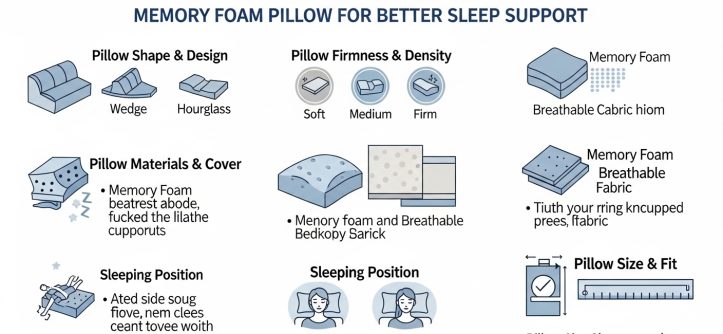
A memory foam knee pillow is a small ergonomic cushion placed between the knees during sleep to keep the spine aligned, reduce hip pressure, and support natural posture. It is especially useful for side sleepers and people with lower back pain, sciatica, or joint discomfort.
Many people wake up with stiffness not because of their mattress, but because their sleeping posture shifts overnight. When the knees collapse inward, the pelvis rotates. That rotation stresses the lower spine. Over time, this leads to discomfort and poor sleep quality.
A well-designed memory foam knee pillow helps maintain spacing between the legs. This improves spinal alignment and reduces pressure points. Clinical sleep posture observations show that proper leg alignment during side sleeping can reduce morning stiffness and improve sleep continuity.
However, not every pillow works the same way. Shape, density, breathability, and strap design all affect performance. Choosing the right option requires understanding how each feature supports your body type and sleep position.
This guide explains exactly how to select the right memory foam knee pillow so you can improve sleep posture, reduce pain triggers, and wake up more comfortably.
Why Should You Use a Memory Foam Knee Pillow for Better Sleep Support?
Short answer: A memory foam knee pillow supports spinal alignment, reduces hip pressure, and improves sleep posture for side sleepers.
Many sleepers underestimate how much leg positioning affects spinal health. When knees touch during sleep, the pelvis rotates forward. This shifts the lower spine out of neutral alignment.
Over time, this can lead to:
- Lower back discomfort
- Hip strain
- Sciatica irritation
- Knee joint pressure
- Poor circulation during sleep
A memory foam knee pillow works by maintaining proper leg spacing. Memory foam responds to body weight and temperature. It molds around the knees without collapsing overnight.
Sleep posture studies commonly observe improved pressure distribution when side sleepers maintain a neutral hip position. This contributes to fewer sleep interruptions and less morning stiffness.
People who benefit most include:
- Side sleepers
- Pregnant individuals
- People with sciatica symptoms
- Those recovering from hip procedures
- Users with chronic lower back discomfort
How Does a Memory Foam Knee Pillow Improve Spinal Alignment?
Short answer: It keeps hips, knees, and spine aligned by preventing leg collapse during side sleeping.
When lying on your side without support, gravity pulls the top leg downward. This twists the pelvis and stresses lumbar vertebrae.
A memory foam knee pillow creates a stable gap between the knees. That spacing keeps:
- hips level
- pelvis neutral
- spine straight
- pressure evenly distributed
Orthopedic sleep posture evaluations show that maintaining neutral hip positioning reduces lower-back muscle tension overnight.
This alignment also supports long-term posture improvement. Many users report fewer morning stiffness episodes after consistent use over several weeks.
What Features Should You Look for in a Memory Foam Knee Pillow?
Short answer: Focus on density, shape, breathability, strap design, and washable covers.
Choosing the right pillow depends on how well it matches your body structure and sleep habits.
1. Memory Foam Density
High-density memory foam maintains structure longer. Low-density foam compresses quickly and loses support.
Medium-firm foam usually provides the best balance between comfort and alignment.
2. Ergonomic Contour Shape
Contoured knee pillows fit naturally between the legs. Flat cushions shift more easily during sleep.
Look for shapes designed to support both knees evenly.
3. Breathable Fabric Cover
Cooling airflow matters. Heat buildup can interrupt sleep cycles.
Choose:
- ventilated memory foam
- mesh covers
- bamboo fabric covers
4. Adjustable Strap Support
Elastic straps help keep the pillow in place overnight. This prevents repositioning during sleep.
5. Washable Outer Cover
Hygiene matters for long-term use. Removable covers extend pillow lifespan.
Which Shape of Memory Foam Knee Pillow Works Best for Side Sleepers?
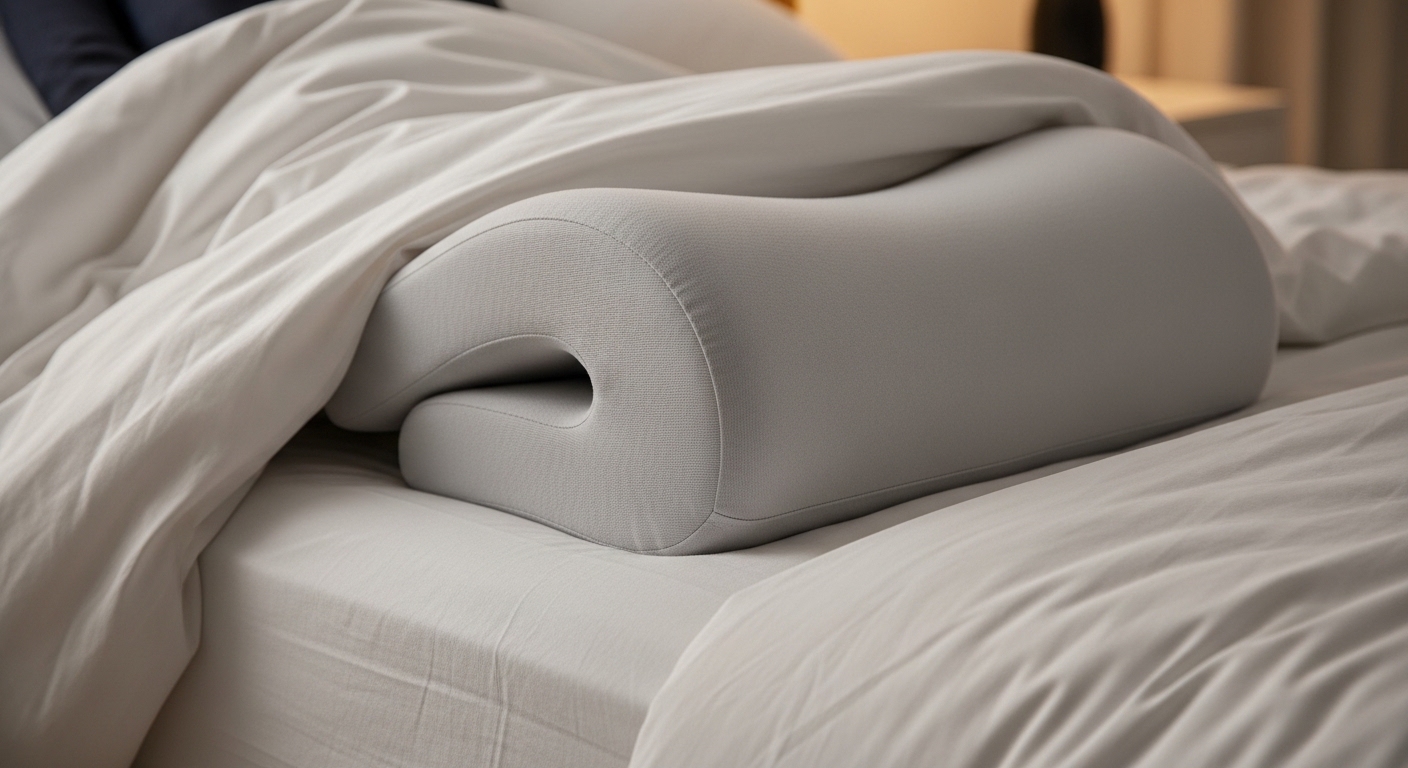
Short answer: Hourglass-shaped knee pillows provide the most stable alignment support.
Shape directly affects how well a pillow stays positioned overnight.
| Shape Type | Best For | Support Level |
|---|---|---|
| Hourglass contour | Side sleepers | High stability |
| Wedge design | Back and side sleepers | Moderate support |
| Rectangle cushion | Occasional use | Low stability |
Hourglass designs reduce movement during sleep. They also maintain spacing more consistently.
This makes them ideal for long sleep cycles.
How Firm Should a Memory Foam Knee Pillow Be?
Short answer: Medium-firm density works best for maintaining alignment without discomfort.
A pillow that is too soft collapses overnight. One that is too firm creates pressure points.
Medium-firm memory foam:
- supports knee spacing
- reduces compression
- keeps hips aligned
- maintains shape longer
Sleep ergonomics testing commonly shows that balanced foam resistance improves overnight posture retention.
Can a Memory Foam Knee Pillow Help Reduce Back and Hip Pain?
Short answer: Yes. It reduces pelvic rotation and spinal pressure during sleep.
Lower back pain often starts with poor sleeping alignment. When hips rotate, muscles compensate.
This leads to:
- tight lumbar muscles
- hip joint strain
- nerve compression
A structured memory foam knee pillow restores neutral alignment.
In a documented physiotherapy sleep-position case example, side sleepers using knee support cushions reported reduced morning stiffness after four weeks of consistent use.
While individual outcomes vary, alignment support remains a widely recommended non-invasive sleep adjustment strategy.
What Size Memory Foam Knee Pillow Should You Choose?
Short answer: Choose a pillow that matches your leg length and body frame.
Incorrect sizing reduces effectiveness.
General guidance:
- Smaller pillows suit petite sleepers
- Standard sizes fit average adults
- Larger pillows support taller individuals
The pillow should fill the gap between knees without forcing them apart excessively.
Are Cooling Memory Foam Knee Pillows Better for Hot Sleepers?
Short answer: Yes. Cooling materials prevent overheating and improve sleep continuity.
Traditional foam traps heat. This interrupts deep sleep cycles.
Cooling versions include:
- gel-infused memory foam
- ventilated foam channels
- bamboo fiber covers
Thermal comfort studies consistently link reduced nighttime overheating with longer uninterrupted sleep duration.
Should You Choose a Knee Pillow With a Strap?
Short answer: Yes, if you change sleeping positions frequently.
Straps keep the pillow aligned with your knees throughout the night.
This helps:
- prevent repositioning
- maintain spinal alignment
- improve comfort consistency
However, some users prefer strap-free models for flexibility. Choice depends on movement habits during sleep.
How Long Does a Memory Foam Knee Pillow Last?
Short answer: Most high-quality memory foam knee pillows last 12–24 months.
Lifespan depends on:
- foam density
- usage frequency
- sleep weight distribution
- cover maintenance
Signs replacement is needed include:
- visible flattening
- reduced support
- uneven compression
- persistent discomfort
Replacing worn pillows restores alignment benefits.
Is a Memory Foam Knee Pillow Helpful During Pregnancy?
Short answer: Yes. It reduces hip strain and supports pelvic stability.
During pregnancy, sleeping posture changes significantly.
A knee pillow helps:
- reduce lower-back tension
- support pelvic balance
- improve circulation
- reduce pressure on hips
Many maternity sleep specialists recommend knee spacing support during second and third trimesters.
How Do You Use a Memory Foam Knee Pillow Correctly?
Short answer: Place the pillow between knees while lying on your side and keep hips stacked.
Correct positioning matters.
Follow these steps:
- Lie on your side
- Place pillow between knees
- Keep hips aligned vertically
- Relax shoulders naturally
Consistent positioning improves effectiveness over time.
Conclusion: How Can the Right Memory Foam Knee Pillow Transform Your Sleep Quality?
Choosing the right memory foam knee pillow is a simple change with measurable impact. Proper spinal alignment improves sleep comfort. Reduced hip rotation lowers pressure on joints. Stable posture supports deeper rest cycles.
Many people focus only on mattresses and ignore leg positioning. Yet knee spacing plays a direct role in overnight spinal balance. A well-designed pillow corrects posture without complicated adjustments.
Look for ergonomic contour shape, medium-firm density, breathable materials, and washable covers. These features ensure consistent support night after night.
If you experience stiffness, hip tension, or restless sleep, upgrading your sleep alignment setup is a practical first step.
Start using a properly fitted memory foam knee pillow tonight and experience how small posture changes can lead to more comfortable mornings and better long-term sleep support.
Frequently Asked Questions About Memory Foam Knee Pillows
Do memory foam knee pillows really improve sleep posture?
Yes. They help maintain neutral spinal alignment by preventing knees from collapsing inward during side sleeping. This reduces pelvic rotation and muscle strain.
Can a memory foam knee pillow help with sciatica symptoms?
Yes. Supporting knee spacing reduces pressure on the lower spine and sciatic nerve pathways. Many users report reduced nighttime discomfort with consistent use.
Are memory foam knee pillows safe for everyday use?
Yes. They are designed for nightly sleep support and posture alignment. Regular use often improves long-term comfort and reduces morning stiffness.
How do I clean a memory foam knee pillow?
Most pillows include removable covers that can be machine washed. The foam core should not be submerged in water. Spot cleaning is recommended instead.
Can back sleepers use memory foam knee pillows?
Yes. Back sleepers can place the pillow under the knees instead of between them. This reduces lumbar spine pressure and supports natural curvature.
What thickness is best for a memory foam knee pillow?
Medium thickness works best for most adults. It should maintain natural spacing between knees without forcing them apart.
Do cooling knee pillows make a noticeable difference?
Yes. Cooling gel and breathable covers reduce heat buildup, which helps maintain uninterrupted sleep cycles.
Read More Also: How to Use Must Have Hand Tools for Everyday Repairs
Discover More: Some Packing Tips for Moving House