You’ve invested in a Marcato pasta machine, but your noodles still stick together, tear apart, or taste more like cardboard than restaurant-quality pasta. You’re not alone. Many home cooks struggle with dough hydration, roller settings, and cutting techniques. The good news? Achieving perfect pasta with Marcato isn’t about talent—it’s about mastering a few scientific principles and practical routines. This guide breaks down every step, from mixing the dough to drying the final strands, so you can produce silky, professional-grade pasta right in your own kitchen.
Why Does Your Homemade Pasta Turn Out Different Every Time?
Inconsistent results usually stem from three variables: flour type, hydration level, and resting time. Marcato machines are precise instruments, but they can’t fix a poorly structured dough. If your pasta is too dry, it cracks; if too wet, it sticks to the rollers. Understanding how these elements interact is the foundation of perfect pasta with Marcato.
The Role of Flour Protein in Dough Structure
Protein content determines gluten development. “00” flour (typically 11-12% protein) is ideal for tender, silky pasta. All-purpose flour (10-11%) works but produces a slightly chewier result. Semolina (13-14%) is best for rustic, hearty shapes. For egg pasta, stick to “00” or a blend of “00” and AP flour. Avoid bread flour—it makes the dough too elastic and hard to roll thin.
How Hydration Affects Roller Performance
Standard egg pasta requires about 25-30% hydration (e.g., 200g flour + 2 large eggs ≈ 100g liquid). If your dough feels crumbly, add a teaspoon of water at a time. If it feels sticky, dust with flour. The dough should feel like soft Play-Doh—smooth, pliable, and never tacky. This sweet spot prevents sticking and ensures the rollers grip the dough evenly.
Why Resting the Dough Is Non-Negotiable
Gluten needs time to relax after kneading. Wrap your dough in plastic wrap for at least 30 minutes at room temperature. This step reduces elasticity, making the dough easier to roll without snapping back. For best results, rest it for 1-2 hours. This simple pause is often the difference between frustration and flawless sheets.
What Is the Ideal Marcato Roller Setting for Thin Pasta?
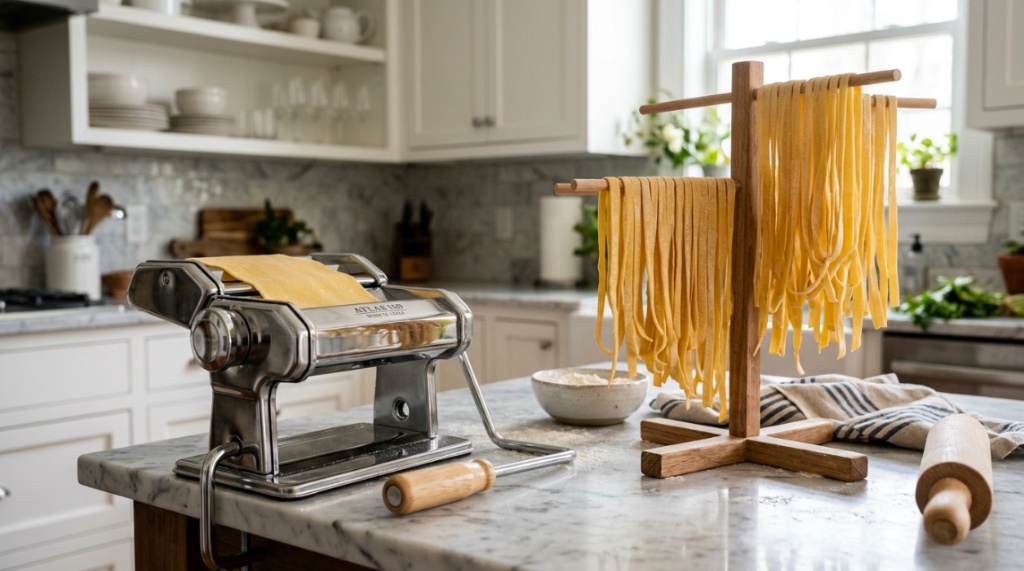
Most Marcato machines have settings from 0 (thickest) to 6 or 7 (thinnest). For standard tagliatelle or fettuccine, you’ll want a final thickness of about 1mm (setting 5 or 6). For lasagna sheets, stop at setting 4. For ravioli, you need slightly thicker sheets (setting 3 or 4) to hold the filling without tearing.
Step-by-Step: From Thick to Thin Without Tearing
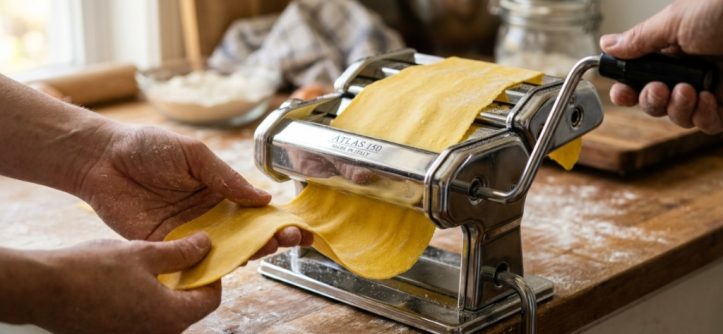
Never skip settings. Start at 0, fold the dough in half, and run it through. Repeat at setting 1, then 2, and so on. This progressive thinning aligns the gluten strands and prevents tearing. If you jump straight to setting 5, you’ll stretch the dough too fast, causing uneven thickness and holes.
How to Know When the Dough Is Thin Enough
You should be able to see your hand faintly through the sheet. If the dough clings to your fingers, it’s too thin. If it feels stiff and resists bending, it’s too thick. Trust the visual cue—light should pass through the sheet like a sheer curtain.
How Do You Prevent Pasta from Sticking During Rolling?
Sticking is the most common complaint, but it’s completely avoidable. The key is surface flour management. Use a light dusting of semolina or rice flour—not all-purpose flour—between the dough and the rollers. Semolina has a coarser texture that creates tiny air pockets, reducing friction.
The “Light Dusting” Technique Explained
After each pass, sprinkle a tiny pinch of semolina over the dough sheet. Brush off excess before folding. You want a dry, non-glossy surface. If the dough looks dull, you’ve added too much flour; if it shines, you need more. This balance keeps the dough moving smoothly through the machine.
What to Do If the Dough Sticks Anyway
Stop the machine immediately. Do not force the dough. Gently peel it off the rollers, re-knead the dough, and re-roll from the thickest setting. Forcing it will leave permanent creases. Once you restart, reduce the hydration by adding a teaspoon more flour to the dough.
Why Does Fresh Pasta Turn Gummy or Soggy When Cooked?
Fresh pasta cooks in 1-3 minutes, unlike dried pasta’s 8-12 minutes. Overcooking is the primary culprit. The starches absorb water rapidly, turning the texture gluey. Also, cooking in insufficient water exacerbates the problem. Use at least 4-5 liters of water per pound of pasta, heavily salted (like seawater).
How to Achieve the Perfect Al Dente Texture
Bring the water to a rolling boil. Add the pasta and stir immediately to prevent clumping. Start testing at 60 seconds. The pasta should be firm to the bite but not chalky in the center. Drain immediately and toss with sauce—don’t rinse. Rinsing washes away the surface starch that helps sauce cling, our in-depth Sailnovo Pasta Maker Review for another budget-friendly machine option.
Pairing Fresh Pasta with the Right Sauce Consistency
Fresh pasta is more delicate than dried, so heavy, chunky sauces overwhelm it. Opt for light, emulsified sauces like melted butter with sage, a simple tomato passata, or a cream-based sauce. The sauce should coat the strands, not pool at the bottom of the bowl.
Which Marcato Attachment Do You Need for Different Shapes?
Marcato offers multiple cutting heads: tagliatelle (6.5mm), fettuccine (4mm), and pappardelle (9mm). The 6.5mm is the most versatile for everyday dinners. The 4mm produces thinner noodles, excellent for lighter sauces. The 9mm is for hearty ragù or bolognese.
Tagliatelle vs. Fettuccine: What’s the Real Difference?
Tagliatelle is slightly wider (6.5mm) and often made with egg. Fettuccine is narrower (4mm) and frequently made without eggs in Rome. For Marcato beginners, start with tagliatelle—the width makes it forgiving to cut and handle. Fettuccine requires more precise dough thickness to avoid breaking.
How to Swap Cutters Without Damaging the Machine
Always turn the handle to align the cutter’s ridged gears before inserting. Press firmly but don’t force. If it doesn’t click in, rotate the handle slowly. Ensure the machine is completely dry before swapping—moisture causes rust and jams. Clean the cutters with a dry brush, never water.
When Should You Dry Pasta for Later vs. Cooking Immediately?
Fresh pasta is best within a few hours of making. If cooking later that day, dust with semolina, nest it in small portions, and cover with a clean towel. For long-term storage (up to 2 weeks), dry it completely at room temperature for 24 hours. Dried fresh pasta has a unique toothsome texture many prefer.
How to Air-Dry Fresh Pasta Without Clumping
Hang strands on a drying rack or lay them flat in a single layer on a semolina-dusted baking sheet. Turn them once after 6 hours. The pasta is ready when it snaps cleanly in half, not bends. Store in an airtight container immediately—humidity is the enemy.
Freezing Fresh Pasta: Pros and Cons
Freezing works for filled pasta (ravioli, tortellini) but not for long strands—they freeze in a tangled mass. If you freeze, lay strands nested in flour, freeze solid on a tray, then transfer to a zipper bag. Cook directly from frozen, adding 1-2 minutes to the cooking time. But for the best perfect pasta with Marcato, air-drying is superior.
Can You Use Marcato Without Eggs?
Absolutely. Water-based pasta (egg-free) makes a firmer, more durable noodle that holds up well in soups or with bold sauces. The hydration differs: for 200g flour, use 90-100ml lukewarm water plus a tablespoon of olive oil. The dough will be stiffer, requiring more effort to knead.
How to Adjust Hydration for Vegan Pasta Dough
Water binds differently than eggs. Mix the water gradually, stopping when the dough just comes together in a shaggy mass. Knead for 8-10 minutes. The dough should feel springy and slightly firm. Let it rest for 30 minutes longer than egg dough—it needs more time to relax.
What to Expect When Rolling Egg-Free Dough
The dough is less elastic and more prone to cracking if rolled too thin. Stop at setting 5 instead of 6. You’ll also notice it’s lighter in color. The flavor is neutral, so season the dough itself—try adding a pinch of turmeric or black pepper for depth.
Is It Worth Cleaning Your Marcato Every Time?
Yes, but you shouldn’t use water. Marcato machines are carbon steel or aluminum—water causes rust. After each use, let the machine run with a dry, stiff brush attached to remove flour dust. Wipe the outside with a slightly damp cloth and dry immediately. Periodic maintenance ensures smooth operation.
Daily Cleaning Routine in 60 Seconds
After cutting, the rollers will have flour residue. Crank the handle backward to eject any stuck dough bits. Use a small dry pastry brush to sweep away flour. For the cutter heads, run a piece of dry pasta dough through to push out trapped fragments. Store in a cool, dry area.
How to Remove Stuck Dough Without Damaging Parts
Never use knives or metal tools. Soak a cotton swab in warm water and press it onto the stuck dough for 10 seconds, then gently pull the dough away. For stubborn bits, use a wooden toothpick. After cleaning, run a dry cloth through the rollers to remove moisture.
How Do You Troubleshoot Common Marcato Issues?
If the machine jams, the dough is unevenly floured or too wet. If the rollers squeak, they need lubrication (food-grade mineral oil). If the cutters don’t align, you’ve placed them incorrectly. Most problems are solvable in under a minute once you know the cause.
Why Does My Pasta Come Out Ragged on the Edges?
This happens when you roll too thin before the dough is fully relaxed. The edges dry out faster. Dust the edges with a bit of water before rolling, or fold the dough in half and roll again on a thicker setting. Also check that the dough is resting long enough.
What to Do If the Rollers Have Dark Stains
Dark spots are oxidized steel, not rust. They’re harmless but visually unappealing. Rub with a paste of baking soda and water, then rinse and dry thoroughly. Prevent future stains by never leaving the machine wet and applying a thin layer of mineral oil after cleaning.
Which Flours Work Best for Gluten-Free Pasta in Marcato?
Gluten-free dough lacks elasticity, making it tricky. Use a commercial gluten-free flour blend that includes xanthan gum or psyllium husk. The hydration is higher—about 40% water. The dough will be sticky and delicate, so handle it gently and roll to a thicker setting (4 or 5).
How to Prevent Gluten-Free Pasta from Falling Apart
Add one beaten egg to the dough for structure, or use a binder like xanthan gum (1/4 tsp per 100g flour). Rest the dough for 30 minutes to hydrate the fibers. Roll slowly between sheets of parchment paper if sticking occurs. Cook immediately—gluten-free pasta disintegrates if stored.
Ideal Roller Settings for Gluten-Free Dough
Start at setting 0, then advance one step at a time, but skip setting 1. The dough compresses too much. Go from 0 to 2 directly. Use liberal semolina dusting on the sheets. The final pasta will be more fragile, so handle with care when cutting.
Frequently Asked Questions
How long should I knead Marcato pasta dough?
Knead for 8-10 minutes by hand, or 4-5 minutes with a stand mixer. The dough should be smooth and slightly elastic. Under-kneading leads to crumbling; over-kneading makes it tough.
Can I use my Marcato machine for lasagna sheets and ravioli?
Yes. For lasagna, roll to setting 4 and cut into rectangles. For ravioli, roll thicker (setting 3) to prevent tearing during filling. The machine handles all flat sheet tasks.
Why is my Marcato pasta machine hard to turn?
This indicates dough that’s too stiff or dry. Remove the dough, wrap it in a damp towel for 10 minutes, then knead in a teaspoon of water. Also check that no dried dough is stuck between the gears.
What is the best way to store fresh pasta overnight?
Leave it uncovered on a floured tray in the fridge for up to 24 hours. Cover only after it’s fully dried to avoid moisture buildup. This step improves flavor and texture.
How often should I oil my Marcato machine?
Apply food-grade mineral oil to the roller edges every 3-4 uses. Wipe off excess thoroughly. Oil the cutter heads every 6-8 uses. Never use vegetable oil—it becomes rancid.
Can I roll pasta dough that has been frozen?
Yes, but thaw it completely in the fridge for 12 hours. Knead briefly to redistribute moisture. Rest at room temperature for 20 minutes before rolling.
Final Thoughts on Mastering Your Marcato
Perfect pasta with Marcato is not about complex recipes or expensive attachments—it’s about controlling hydration, respecting rest times, and understanding your machine’s settings. Start with a classic egg dough, practice the progressive rolling technique, and don’t fear the occasional failure. Every batch teaches you something new.
Once you’ve mastered the basics, experiment with flavor additions (spinach, squid ink, herbs) and alternative flours. Keep this guide handy, but also trust your hands and eyes—they’re your best tools. Now heat up your water: your first perfect batch is closer than you think.